June 10, 2021
Packshot photography: a quick guide for 2026
What a packshot is, where it's used, and how to shoot one - camera settings, lighting, angles, tricky packaging, and the image specs marketplaces ask for.

Industry 4.0 made data the backbone of manufacturing. Automated photography extends that logic to visual documentation - consistent, traceable, AI-ready image records that support quality control, compliance, and e-commerce from a single capture session.
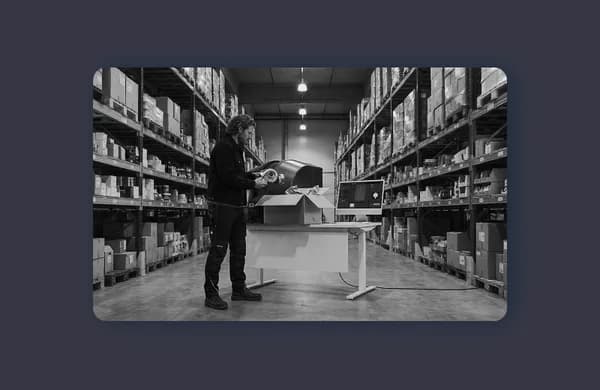
Table of contents

Industry 4.0 has made data the backbone of manufacturing. Automated photography extends this logic to visual documentation - creating consistent, traceable, AI-ready image records that support quality control, compliance, and e-commerce from a single capture session.
Industry 4.0 has changed how factories work. Today, IoT sensors, MES platforms, and connected devices collect real-time data across the production line. But one type of data has stayed manual for too long: visual documentation.
Automated photography changes this. It turns product images from one-off, creative tasks into repeatable, operational data that connects directly with smart manufacturing systems. When human intervention is reduced, companies can produce visual content as fast as their manufacturing processes.
This article looks at how automated photography fits into cyber-physical systems, why manufacturers are choosing new technologies now, and how visual documentation is becoming a key part of modern management system strategy.
Industry 4.0 is the fourth industrial revolution. It brings together physical, digital, and biological technologies to change how products are made and documented. Here is how the manufacturing industry has developed over time:
| Revolution | Key driver |
|---|---|
| First Industrial Revolution | Water and steam power |
| Second Industrial Revolution | Electricity and mass production |
| Third Industrial Revolution | Computers and early automation |
| Industry 4.0 | The industrial internet, big data, and artificial intelligence |
A smart factory is a cyber-physical system. It uses advanced technologies to analyze data, run automated processes, and improve itself over time. Smart factories use sensors, embedded software, and robotics to collect data and support better decisions at every stage of production.
Cloud computing makes this possible at scale. It connects different parts of a business, stores large amounts of data, and allows that data - including production records, quality files, and visual assets - to be analyzed anywhere. This connectivity is one of the defining features of digital transformation in the manufacturing industry.
Modern manufacturing replaces slow, inconsistent manual processes with digital technologies designed for reliability. Documentation must follow the same standard: it needs to be consistent, searchable, and ready to connect with other systems across the global economy.
Visual records are now required for:
Written instructions and manual photography cannot keep up with these quality requirements at scale.
Images are no longer just descriptive - they are evidence. Regulators, human resources teams, and supply chain partners use visual records to confirm product quality, packaging standards, and raw materials condition. As consumer demand grows, visual documentation must be treated with the same care as any other part of the production process.
This is where visual work instructions (VWIs) are important. VWIs use images, videos, and short text to guide workers through complex processes. Research in workplace learning consistently shows that visual and hands-on formats improve information retention compared to text-only instruction. This makes work instructions in visual format a more practical choice for detailed, multi-step manufacturing operations.
VWIs also work well for multilingual teams because they reduce dependence on reading. They function as effective visual aids - they can be updated in minutes and sent to any device immediately, which means fewer production stoppages caused by outdated or misunderstood instructions.
These two technologies are often confused, but they do different jobs.
| Aspect | Machine vision | Automated photography |
|---|---|---|
| Function | Real-time defect detection | Structured image documentation |
| Output | Pass/fail decision | High-resolution visual record |
| Used by | Production line software | Quality, compliance, and e-commerce teams |
| Position | Integrated into the production line | Next to the production line |
Machine vision uses algorithms to make instant decisions - detecting defects or measuring components directly on the line. Automated photography creates high-resolution images for people to review and for building digital twin records. These advanced technologies work well together:
For example, a manufacturer producing electronic components might use machine vision to catch defects at speed, while automated photography captures the final verified product for compliance files and e-commerce listings - all within the same smart factory workflow.
Automated photography systems are placed next to the production line, not inside it. This means:
Automated photo studios are built to remove reflections and shadows from every shot. Motorized turntables rotate products automatically for 360-degree photography without any manual handling. High-resolution DSLRs or mirrorless cameras are the standard choice because they meet the image quality requirements for both compliance documentation and e-commerce.
These systems can also run 24 hours a day, 7 days a week - with no breaks - so visual documentation keeps up with continuous production. This is especially valuable in environments where increasing automation means the line never stops.
The important digital transformation shift is this: automated photography doesn't just produce pictures - it produces structured operational data. Each image capture includes:
Modern systems connect with ERP platforms so images are automatically linked to quality control records. This makes photography a functional part of smart factory architecture, not just a support task.
Machine learning and artificial intelligence add further value here. By processing large volumes of visual data from production, manufacturers can identify patterns, detect issues early, and feed that information into predictive maintenance workflows - cutting equipment downtime and extending the life of assets. This is digital transformation applied directly to content creation and data analysis.
Automated photography dramatically reduces variability compared to manual processes, delivering far more consistent results across high-volume production runs. Standardized angles and lighting create reliable visual work instructions that teams can use across automated workflows. It also reduces the chance of human intervention during quality inspections. When connected to quality management software, the system can provide near-real-time visual feedback against product specifications - though the level of automation depends on the platform.
In industries where public health or safety is involved, visual records must meet strict standards. Automated systems produce consistent, timestamped documentation that is easy to retrieve - reducing risk during audits and regulatory reviews by government agencies.
Linking images to serial numbers gives manufacturers full traceability across the supply chain. This supports:
Orbitvu automated photography solutions connect directly with existing manufacturing processes - making visual documentation a natural part of the line, not a separate step. High-resolution 360° captures and detailed product packshots help teams spot product quality inconsistencies before they move further down the supply chain.
Each capture feeds into a structured product database, turning every shot into a live digital twin record. Every component is visually documented and linked to its production data - supporting quality assurance, audit readiness, and traceability across batches. When a question arises about a specific part or order, the answer is already in the system.
SKU metadata is captured and stored alongside every image. This includes product dimensions, file format, and category-specific data fields such as color, model number, and material. Each product record is built automatically - no manual data entry needed. This structured approach means that when a product is ready to go live, its full data profile is already complete and ready to publish.
Orbitvu plugins then take this further. They match visual content to the correct product listing using SKU identifiers and push it directly to platforms including Shopify, Magento, WooCommerce, Shopware, and PrestaShop. Content can be hosted on your own e-shop or through Orbitvu Cloud - with 360° spin viewers included in both options. The result is a single, connected workflow: from physical product to fully documented, live listing, with no manual steps in between.
Yes - and this is one of the strongest business cases for automated photography. One capture session can produce assets for:
For e-commerce teams, the benefit is clear. Automated photography speeds up the onboarding of new products to online stores, lowers the cost per image, and helps brands keep up with growing consumer demand for high-quality visual content creation. Product teams consistently report that consistent, professional imagery reduces return rates and supports stronger conversion performance - a direct commercial benefit of systematic visual documentation.
Getting visuals done at the source removes the need for external studios, which helps companies increase productivity and shorten time to market.
Several Industry 4.0 pressures are coming together at the same time:
There is also a wider strategic reason. Industry 4.0 is driven by the need to respond to changing consumer demand and market conditions. Manufacturers that aim for mass customization - sometimes producing a single unique item per order - need management system tools that are just as flexible. Automated photography scales to match that level of variety, making it one of the most practical new technologies available to the manufacturing industry today.
The most successful implementations treat automated photography as operational infrastructure - not a secondary tool:
For manufacturers working at scale, automated photography is becoming a standard part of modern smart manufacturing strategy. By treating images as structured data, manufacturers bring Industry 4.0 principles into an area that has been manual for too long.
In smart manufacturing, images are no longer just pictures. They are knowledge - built into the system itself.
Machine vision uses algorithms to make real-time pass/fail decisions on the production line. Automated photography captures high-resolution images for human review, compliance records, and e-commerce. They serve different but complementary roles in the same smart factory ecosystem.
One automated photography session can produce assets for both quality documentation and e-commerce at the same time. This removes the need for separate studio shoots and speeds up the process of adding new products to online stores - helping companies respond faster to consumer demand.
High-resolution DSLRs or mirrorless cameras are standard. They are combined with motorized turntables for 360-degree capture and controlled lighting that removes reflections and shadows from every shot.
Yes. Automated photography systems run continuously without breaks, making them fully compatible with round-the-clock production environments and the demands of increasing automation in modern smart factories.
June 10, 2021
What a packshot is, where it's used, and how to shoot one - camera settings, lighting, angles, tricky packaging, and the image specs marketplaces ask for.
October 8, 2026
AI-generated product images are fast and cheap, but they can drift from the real product. Here is where generated images lose product truth, what makes AI in product photography trustworthy, and how Orbitvu uses AI around the real product, never instead of it.
May 24, 2021
Learn how to photograph models step by step: planning, posing, lighting, equipment, and post-production, for lookbook and e-commerce shoots.