June 10, 2021
Packshot photography: a quick guide for 2026
What a packshot is, where it's used, and how to shoot one - camera settings, lighting, angles, tricky packaging, and the image specs marketplaces ask for.

Discover how automated photography transforms museum digitization, industrial quality control, and product documentation, delivering consistent and scalable results.
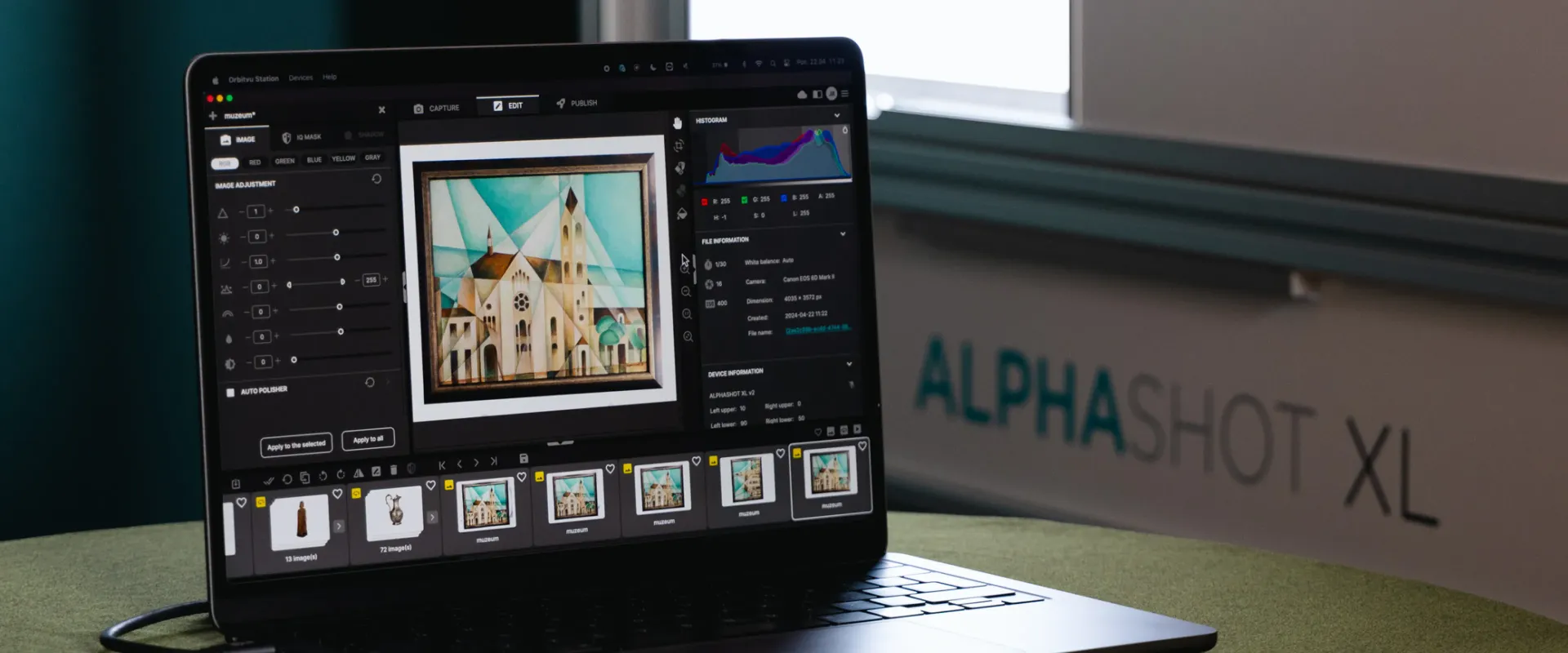
Table of contents
Digitizing museum collections is the process of creating high-resolution digital representations of physical artifacts, documents, and artworks using automated photography systems, 3D scanning, and specialized software.
In 2026, digitization has become a core component of digital strategy for museums. Cultural institutions worldwide are now integrating advanced technologies, such as Artificial Intelligence, photogrammetry, and laser scanning, to preserve cultural heritage and expand global access (Cuseum AI Research, 2025).
In this guide, you'll discover how automated photography transforms museum digitization from a manual barrier into a scalable digital strategy. We'll explore the difference between digitization and digitalization, examine the challenges of manual workflows, and show you how automated systems enable new visitor experiences and revenue opportunities. Whether you're just starting your digitization journey or looking to scale existing efforts, this article provides a practical overview to help you build a sustainable, future-ready digital collection.
When you set out to digitize your collections, it's easy to assume that capturing photos of artifacts is the end goal. In reality, capturing images is only the starting point. You need to understand the difference between digitization and digitalization if you want your efforts to deliver lasting value.
Digitization refers specifically to the creation of digital representations of physical objects. This might include:
Photogrammetry and laser scanning generate detailed virtual replicas of 3D artifacts with sub-millimeter accuracy. This provides detailed images for research and preservation.
The goal is to preserve a faithful digital copy of each item. This lets you study, research, and provide public access without exposing the original artifact to repeated handling. Uniform lighting, sharp focus, and standardized angles make sure that each image serves as a reliable record of the object.
Digitalization is the broader transformation that happens when you fully integrate digital assets into your institution's workflow and strategy. It's not just about having images - it's about making them usable, searchable, and accessible at scale.
AI-driven tools help extract information and apply standardized metadata to make records searchable across global databases. You can perform full-text searches of historical documents using Optical Character Recognition (OCR) in seconds, a task that previously required weeks of archival visits.
Digitalization involves:
Automated photography plays a key role in bridging these two concepts. By producing standardized, high-quality images efficiently, automation makes sure that your digitization process is reliable and scalable. These assets then become the backbone of digitalization, feeding seamlessly into CMS platforms, digital archives, and public-facing portals.
This approach lets you preserve your collections and extend your reach far beyond your walls. You can offer immersive experiences to a global audience.
Museums and archives often hold 50,000 to 500,000+ artifacts, each with unique characteristics and historical value. The British Museum alone holds approximately 8 million objects, while only 2 million of them are available online as of December 2025 (British Museum Annual Report, 2025). If you're trying to digitize your collections, this volume creates a major challenge.
Traditional manual photography workflows are time-consuming and inconsistent. Each item is individually photographed, adjusted for lighting, and post-processed.
Manual processes introduce several critical challenges:
Differences in lighting, camera settings, and angles produce images that vary by 30-40% in quality metrics (color accuracy, resolution, detail). This makes it difficult to present a cohesive collection online or use images for comparative research.
Manual workflows take longer to complete. High-value or fragile objects require additional precautions, further reducing the number of items you can process per day.
Mislabeling files, skipping metadata entry, or incorrectly framing objects damages the integrity of your digital records. These errors create long-term problems that are costly to fix.
Many museums face financial downturns in 2026 due to inflation, shifting philanthropy, and reduced government funding (AAM, 2025). Assigning limited staff solely to photography takes resources away from curatorial, conservation, or educational work.
Digitization of museum collections isn't cheap and requires significant investment in equipment, staff, and processes.
Automated photography solves these challenges. By standardizing capture processes and integrating object handling with camera control systems like Orbitvu Alphashot XL and lighting systems, automation increases throughput while maintaining consistent, high-quality results.
According to Beata Kiszel, Director of the Museum in Tarnowskie Góry: "The studio's size allowed us to set it up in our museum. Our employees, after just two days of training, were able to use it intuitively."
🔍 Read the full case study on museum digitization on our blog or watch it below:
This speeds up museum digitization and makes sure that each digital asset meets professional standards. You can use the digital files immediately for research, exhibitions, and online engagement.
Digitizing museum collections fundamentally reshapes how visitors interact with heritage:
Museums use digitized assets for Augmented Reality (AR) and Virtual Reality (VR) exhibits to add life to static displays. Visitors can explore artifacts in detail with zoom capabilities, view objects from multiple perspectives using 360° spins, and access details invisible to the naked eye.
Digitization removes geographical and economic barriers. High-quality digital collections let researchers, students, and enthusiasts worldwide engage with artifacts in meaningful ways. For example, 3D scans can be converted into tactile models for visually impaired individuals, making museum collections more inclusive and accessible to all visitors.
Aligning with audience habits, such as using QR codes on gallery labels, enhances public engagement.
To truly digitize museum collections at scale, you need to evolve photography from a manual task into an integrated digital system. At Orbitvu, we specialize in automated photography solutions that transform how artifacts are captured.
Rather than relying on individual expertise and repetitive setup, our automation transforms image capture into a controlled, repeatable, and data-driven process. This aligns with broader digitalization strategies used across modern industries.
Orbitvu's systems provide a versatile and powerful solution for the unique challenges of museum digitization, no matter the scale or size of the object. These all-in-one systems combine precision hardware with intelligent software.
These features help museum staff work more efficiently while making sure their digital files are ready for immediate use.
Digitizing museum collections has evolved from basic documentation into a central strategic pillar for cultural institutions worldwide. Automated photography makes this transformation achievable by combining efficiency, consistency, and scalability with the flexibility needed for modern digital platforms.
Through automation, you overcome traditional obstacles like limited staff capacity, inconsistent imagery, and overwhelming volumes of objects.
This approach makes sure that digitization is not a one-time effort, but a sustainable, ongoing process that maximizes both preservation and accessibility.
In essence, automated photography transforms the act of digitizing museum collections from a series of isolated tasks into a strategic digitalization initiative. It bridges preservation, access, and innovation while laying the foundation for the future of cultural heritage.
Interested in learning more about how automated photography can benefit your institution? Check out our solutions and discover how the right equipment can bring millions of artifacts to a wider audience.
Book a free demo with us and let's see how we can help you create a lasting digital legacy.
Use the form to tell us what you are planning and what kind of product content workflow you need.
June 10, 2021
What a packshot is, where it's used, and how to shoot one - camera settings, lighting, angles, tricky packaging, and the image specs marketplaces ask for.
October 8, 2026
AI-generated product images are fast and cheap, but they can drift from the real product. Here is where generated images lose product truth, what makes AI in product photography trustworthy, and how Orbitvu uses AI around the real product, never instead of it.
May 24, 2021
Learn how to photograph models step by step: planning, posing, lighting, equipment, and post-production, for lookbook and e-commerce shoots.